Google to Stop Updating First and Second-Generation Nest Learning Thermostats
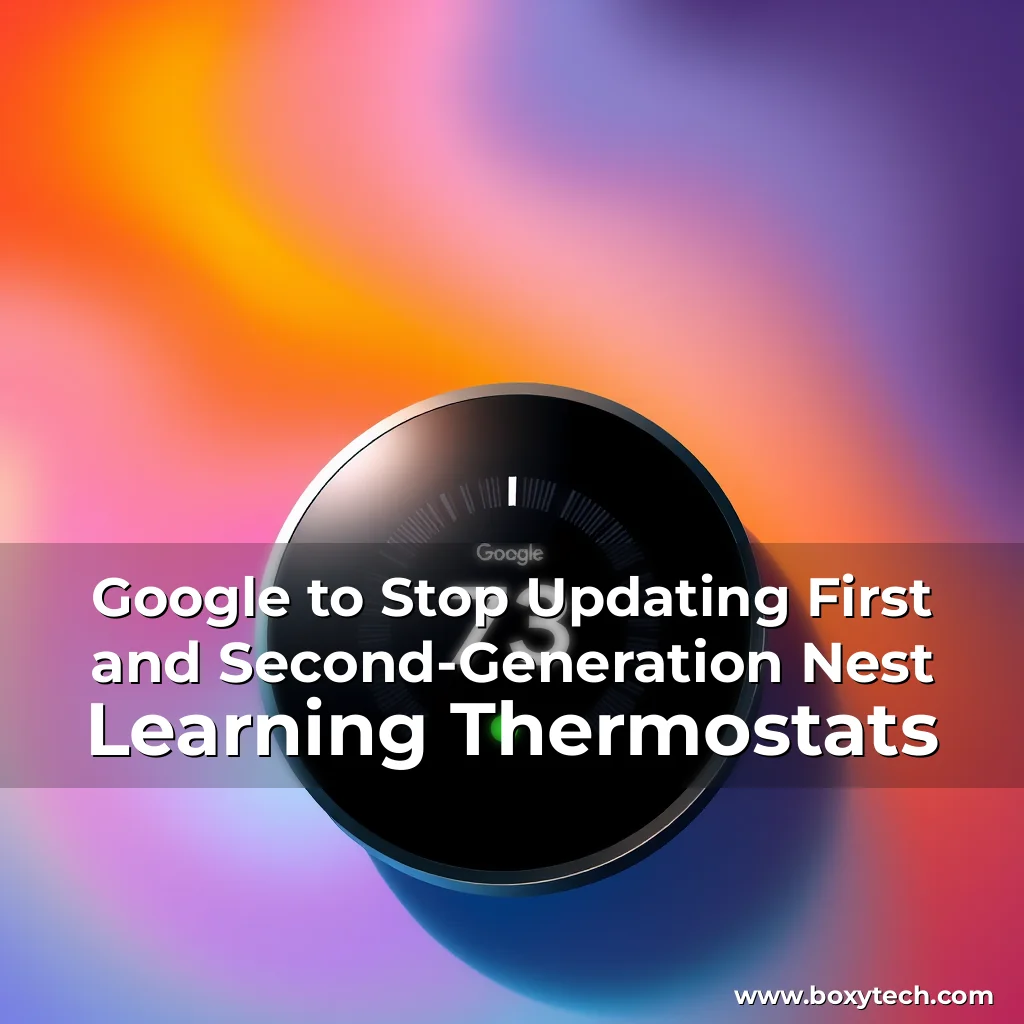
Google has announced that it will no longer provide software updates for its first and second-generation Nest Learning Thermostats. These models, released in 2011, 2012, and 2014, will no longer function with remote controls like smartphones or Google Assistant, starting on October 25, 2025.
Impact on Users
•
- Loss of app features
- Remote control functionality
- Integration with Google Assistant
These features were a significant part of the appeal of these devices, making them popular among consumers. However, owners will still be able to change the temperature and set schedules directly on the thermostat itself.
The Future of Nest in Europe
Google has decided not to release any new Nest thermostats in Europe due to the complexity of heating systems in the region. The company will continue to sell the third-generation Nest Learning Thermostat and the Nest Thermostat E until they run out of stock, but it is stepping back from the European smart thermostat market.
| Country | Third-Generation Nest Learning Thermostat | Tado Smart Thermostat X |
| U.S. and Canada | Available | Discounted |
| Europe | Available | Discounted |
Discounts and Upgrades
Google is offering discounts for upgrades in the U.S. and Canada, where customers can purchase the fourth-generation Nest Learning Thermostat at a significant price reduction. In Europe, customers will receive a discount on the Tado Smart Thermostat X, a competitor’s product that works with the Google Home app.
“Google is committed to providing our customers with the best possible experience, and these discounts are designed to make the transition easier for those who have been loyal to our brand.” – Google spokesperson
The Nature of Smart Home Devices
It is interesting to note that even smart home devices, like the Nest Learning Thermostat, have an expiration date. The first Nest Learning Thermostat was released 14 years ago and was a groundbreaking device at the time. However, technology advances rapidly, and devices quickly become outdated. The fact that Google is no longer supporting these devices highlights the financial realities of the smart home market. Devices have a limited lifespan, and manufacturers need to set a date by which they will no longer be supported in order to maintain profitability.

news is a contributor at BoxyTech. We are committed to providing well-researched, accurate, and valuable content to our readers.