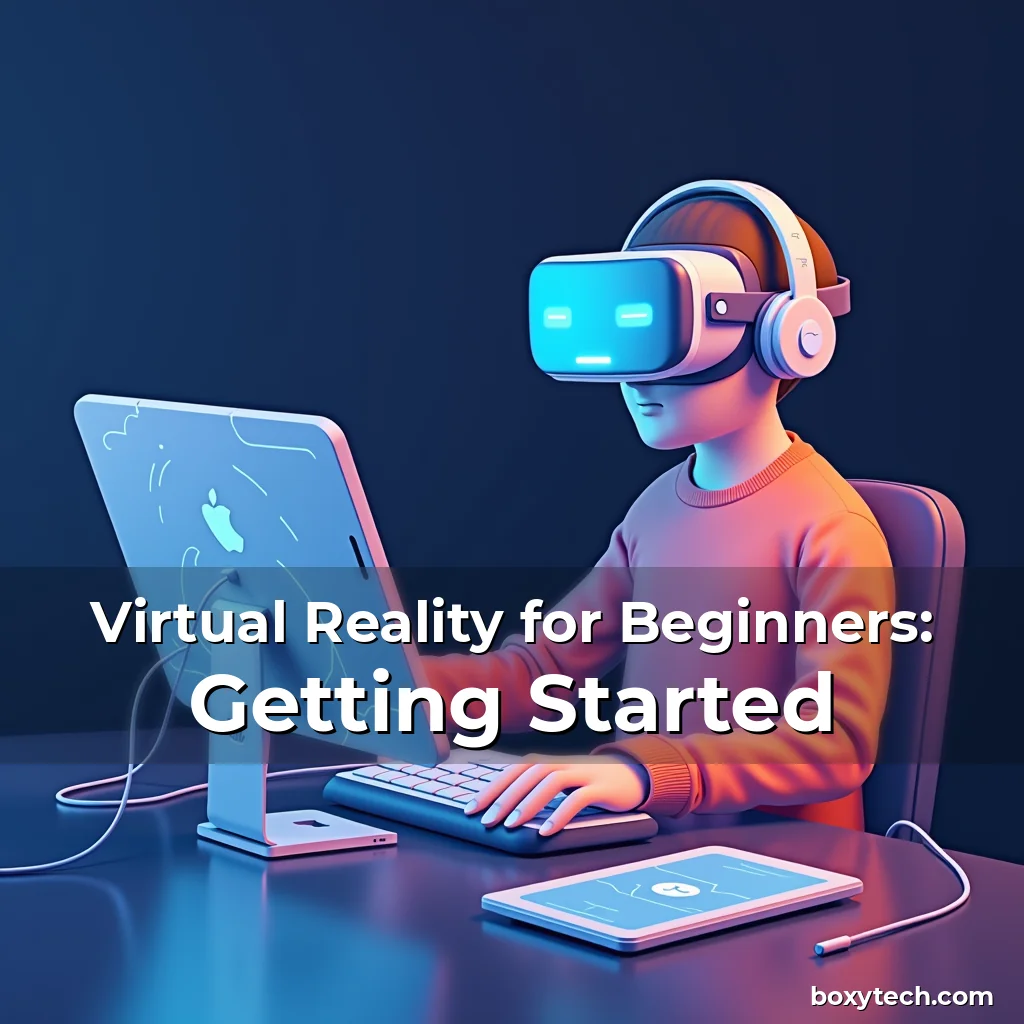
Virtual Reality for Beginners: Getting Started
The Evolution of Virtual Reality: From Concept to Consumer Technology
In the ever-evolving landscape of technology, virtual reality has emerged as one of the most transformative innovations of our time. Once confined to science fiction novels and futuristic films, VR is now shaping industries ranging from healthcare to entertainment.
This article explores the journey of virtual reality—from its conceptual origins in the mid-20th century through today’s cutting-edge consumer devices. We’ll examine how technological advancements have turned once-impossible visions into tangible realities that are redefining human interaction with digital environments.
Origins of Virtual Reality
The roots of virtual reality trace back to the early 1960s when computer scientist Ivan Sutherland created what he called the “Ultimate Display.” This groundbreaking concept envisioned a device capable of immersing users completely within a simulated environment.
Sutherland’s work laid the foundation for modern VR systems by introducing key principles such as head-mounted displays and real-time interaction with digital spaces. These ideas remained largely theoretical until advances in computing power made them feasible decades later.
During the 1980s and 1990s, researchers at NASA and other institutions further developed VR technologies for applications in training simulations and flight control systems. While these efforts showed promise, they were limited by available hardware capabilities and high costs.
The term “virtual reality” itself was coined by Jaron Lanier in the late 1980s, who founded VPL Research—the first company to sell VR products commercially. Despite initial enthusiasm, widespread adoption was hindered by technical limitations and lack of compelling content.
Technological Advancements Enabling Modern VR
The resurgence of interest in VR began in the early 2010s with significant improvements in display technology, motion tracking, and processing power. Companies like Oculus, HTC, and Sony invested heavily in developing affordable yet powerful VR systems.
Modern VR headsets utilize high-resolution OLED screens combined with advanced optics to create immersive visual experiences. The resolution has increased dramatically, reducing screen door effects that previously detracted from immersion.
Head-tracking technology has also seen tremendous progress. Contemporary systems use inside-out tracking with cameras integrated into the headset itself, eliminating the need for external sensors or base stations.
Precision motion controllers allow users to interact naturally with virtual objects, making VR experiences feel more intuitive and responsive than ever before. These controllers often include haptic feedback to enhance realism.
- Display technology: High refresh rates (typically 90Hz or higher) ensure smooth movement without causing nausea or discomfort
- Field of view: Most current headsets offer around 100-110 degrees of peripheral vision, mimicking natural human sight patterns
- Audio integration: Spatial audio solutions place sound sources accurately within three-dimensional space relative to the user’s position
- Processing power: Advanced GPUs enable complex physics simulations and realistic lighting calculations necessary for photorealistic environments
Current Applications Across Industries
Today’s VR technology finds application across numerous sectors, each leveraging its unique advantages differently. In healthcare, surgeons use VR for pre-operative planning and medical training scenarios.
Educational institutions employ VR to provide interactive learning experiences, particularly beneficial for subjects requiring spatial understanding such as architecture and engineering. Students can explore ancient ruins or conduct chemistry experiments safely in virtual labs.
The entertainment industry has embraced VR for gaming and cinematic experiences. Major studios produce VR-exclusive content while game developers push boundaries with increasingly sophisticated gameplay mechanics.
Real estate companies use VR to showcase properties remotely, allowing potential buyers to tour homes virtually before scheduling physical visits. This approach saves time and reduces logistical challenges associated with traditional property viewings.
In retail, brands implement augmented/virtual reality solutions to let customers try on clothes or visualize furniture in their own spaces before purchasing. This enhances online shopping experiences significantly.
Manufacturing firms apply VR for product design visualization and assembly line optimization. Engineers can identify ergonomic issues and make adjustments before committing to expensive prototypes.
Virtually every industry has found some form of value in integrating VR into daily operations, demonstrating its versatility beyond mere novelty status.
Consumer vs Enterprise VR Systems
Distinguishing between consumer-grade and enterprise-level VR equipment reveals two distinct approaches tailored to different needs. Consumer VR focuses on accessibility and affordability, whereas enterprise solutions prioritize performance, durability, and specialized functionality.
Popular consumer devices such as Meta Quest series, PlayStation VR, and Valve Index offer standalone or PC-connected options suitable for general public use. These systems emphasize ease-of-use and compatibility with mainstream media formats.
Enterprise VR systems like those used in industrial training typically feature higher-end components including professional-grade graphics cards and more accurate motion capture solutions. They may be configured for multi-user environments supporting collaborative projects.
One key difference lies in software ecosystems—consumer platforms host widely accessible apps and games while enterprise versions often require custom development for specific business requirements.
Data security considerations also differentiate both categories. Business-oriented implementations must comply with strict data protection regulations regarding employee monitoring and sensitive information handling.
Challenges Facing Widespread Adoption
Despite remarkable progress, several obstacles still prevent mass market penetration of VR technology. Chief among these concerns is the issue of user comfort and ergonomics. Prolonged usage can lead to eye strain, headaches, and even temporary loss of balance.
Many consumers remain hesitant due to the cost factor involved in acquiring quality VR gear along with compatible hardware. Even though prices have decreased over recent years, entry-level setups often exceed $500, which remains a barrier for many potential adopters.
Content availability continues to pose another challenge. While there are thousands of games and applications available for VR platforms, not all content provides equal levels of immersion or engagement. Quality varies greatly depending on developer resources and creative intent.
The sensory disconnect experienced by some users presents an additional hurdle. Individuals accustomed to traditional interfaces sometimes find the transition to full-body motion controls disorienting initially.
Privacy concerns related to biometric data collection also raise eyebrows among privacy-conscious individuals. Some VR systems track head movements, eye gaze direction, and hand gestures—all potentially useful but also revealing personal behavioral patterns.
Future Directions and Emerging Technologies
The future of virtual reality promises exciting developments that could redefine our relationship with digital worlds entirely. One prominent area under investigation involves full-body tracking suits equipped with sensors capturing minute bodily motions with exceptional accuracy.
Brain-computer interface (BCI) research represents another frontier where thoughts might someday translate directly into actions within virtual environments. Though currently rudimentary, this field holds immense potential for people with disabilities seeking new ways to interact digitally.
Advancements in haptics technology aim to deliver more nuanced tactile sensations. Future gloves or wearable devices could simulate textures, temperature changes, and pressure variations realistically enhancing overall immersion levels substantially.
Artificial intelligence integration will likely play a crucial role in next-generation VR experiences. Intelligent avatars responding dynamically based on user behavior could revolutionize social interactions taking place in virtual realms.
Merging augmented reality elements with traditional VR creates hybrid experiences known as mixed reality (MR). This approach allows seamless transitions between digital overlays and fully immersive simulations opening up novel possibilities for everyday applications.
Cloud-based VR solutions represent another emerging trend aiming to reduce reliance upon local computing hardware. By offloading heavy graphical processing tasks onto remote servers via fast internet connections, cloud VR makes high-quality experiences achievable even on less powerful devices.
The continued miniaturization of components coupled with breakthroughs in materials science suggests we’re approaching an era where VR becomes more lightweight, comfortable, and universally accessible—an evolution reminiscent of how smartphones transformed communication globally.
Getting Started With Your First VR Experience
If you’re intrigued by the prospects offered by virtual reality but unsure where to begin, consider starting with lower-cost options designed specifically for newcomers. Entry-level headsets such as Google Cardboard demonstrate basic VR principles effectively using smartphone phones as display units.
Better alternatives include budget-friendly models like the Meta Quest 2 which requires minimal setup while providing decent performance for casual use cases. These portable systems operate independently of PCs making them ideal choices for exploring foundational aspects of VR easily.
To maximize enjoyment during your introductory sessions, allocate shorter durations initially focusing on simple experiences rather than demanding adventures right away. Gradually increase exposure times as your body adjusts to wearing headgear consistently.
Experimentation plays vital role here too—try various genres spanning education, exploration, relaxation exercises etc., to discover personally preferred types of interactions within digital landscapes created artificially yet convincingly.
Consider joining online communities dedicated exclusively to VR enthusiasts sharing tips about best practices maintaining equipment longevity alongside discovering lesser-known gems hidden within vast libraries available nowadays freely or affordably through different stores offering varied selections catering diverse tastes worldwide.
The Broader Implications of Immersive Technology
As virtual reality becomes more prevalent in society, it raises profound questions about our perception of reality itself. When digital experiences become indistinguishable from physical ones, distinguishing between authentic existence versus artificial constructs grows increasingly challenging.
Philosophical debates surrounding presence—our sense of being physically located somewhere despite knowing intellectually otherwise—are gaining renewed relevance amidst rapid technological progression occurring simultaneously across multiple domains influencing culture significantly over extended periods.
Economically speaking, VR threatens to disrupt existing markets while creating entirely new industries centered around digital experiences. Real estate agents preparing listings using virtual tours may see shifts toward more efficient property transactions facilitated effortlessly through enhanced connectivity provided reliably via broadband infrastructure expanding reach rapidly especially post-pandemic recovery phases ongoing globally affecting billions living busy lives constrained geographically severely restricted mobility wise lately quite drastically indeed.
Education reform advocates envision classrooms enriched considerably utilizing VR tools enabling students grasp abstract scientific theories concretely visually through demonstrations impossible traditionally achieving similar results effectively without recourse virtual mediums now available readily anywhere anytime thanks innovation driving change continuously.
Psychologists studying cognitive development observe intriguing phenomena regarding memory retention amongst learners exposed regularly structured curricula incorporating immersive techniques showing promising outcomes suggesting future pedagogical methodologies could benefit immensely from sustained implementation proven effective evidenced empirically validated scientifically rigorous studies undertaken meticulously over prolonged timelines establishing credibility essential convincing skeptics open-minded individuals alike seeking verifiable assurances supporting claims made confidently presented publicly discussed openly shared knowledge gained collaboratively through transparent processes ensuring reliability integrity consistency expected demanded from credible sources trusted relied upon frequently routinely habitually engaged actively participated genuinely contributed meaningfully impactful manner.
Culturally, VR introduces fresh avenues for artistic expression unbounded conventional constraints formerly limiting creators working within traditional media frameworks restricting imagination stifling creativity hindering growth impeding progress frustratingly obstructively counterproductive ultimately resulting stagnation detrimental long-term viability unless innovative approaches adopted urgently implemented swiftly scaled appropriately reaching critical mass required catalyzing transformation reshaping perspectives altering paradigms propelling humanity forward collectively achieving common goals benefiting everyone regardless background circumstances conditions prevailing momentary present situations encountered facing daily existence.
Conclusion
The evolution of virtual reality demonstrates its remarkable journey from speculative idea to integral part of contemporary life. As we’ve explored, its impact spans across multiple domains transforming how humans engage with information, each other, and even themselves fundamentally.
While challenges persist regarding accessibility, comfort, and ethical implications, ongoing technological advancements continue pushing boundaries previously thought insurmountable. For those eager to embrace this digital frontier responsibly mindful awareness critically evaluating opportunities threats inherent within any revolutionary shift paradigm, VR offers incredible possibilities waiting patiently to be discovered appreciated celebrated utilized judiciously wisely discerningly carefully selectively cautiously conscientiously.

news is a contributor at BoxyTech. We are committed to providing well-researched, accurate, and valuable content to our readers.