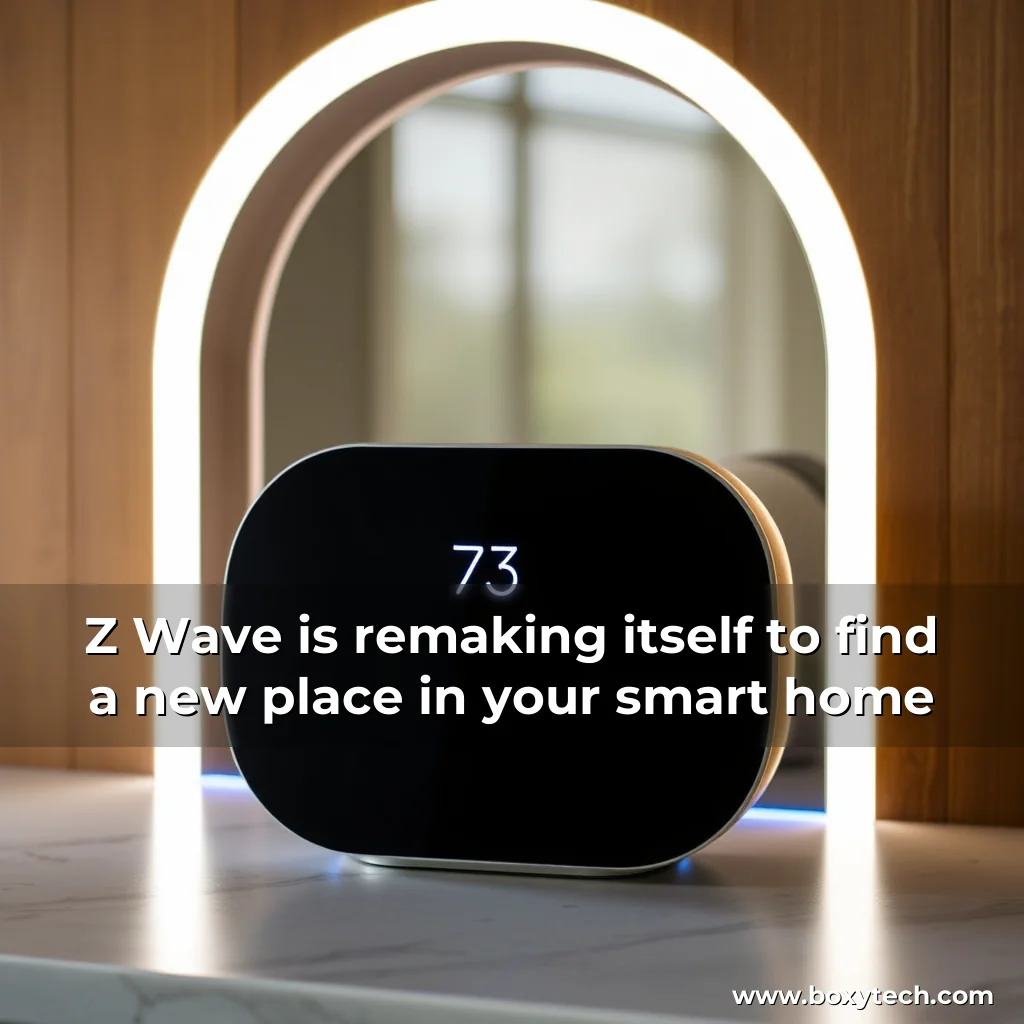
Z Wave is remaking itself to find a new place in your smart home
The Rise of Smart Home Technology
The smart home market has experienced tremendous growth in recent years, with the global smart home market expected to reach $146 billion by 2025. This growth can be attributed to the increasing adoption of IoT devices, the proliferation of smartphones, and the growing demand for convenience and automation in daily life. • Key drivers of the smart home market include:
The smart home market is dominated by a few major players, including Amazon, Google, and Apple, which have developed their own ecosystems and standards for smart home devices.
These companies saw the potential of Z-Wave technology to provide reliable, low-power wireless communication between devices.
How Z-Wave Technology Works
Z-Wave technology works by using a low-power radio frequency to communicate between devices.
This makes it less suitable for small homes or apartments.
What is Z-Wave? Z-Wave is a wireless communication protocol designed for home automation and control systems.
The Rise of Z-Wave
The Z-Wave Alliance has been a driving force behind the adoption of Z-Wave technology in the smart home industry.
Z-Wave Technology and Its Limitations
Z-Wave is a wireless communication technology used in home automation systems. It operates on the 908 MHz frequency band and uses a mesh network topology to enable devices to communicate with each other. This allows for a more reliable and efficient way of controlling devices remotely. • Z-Wave devices can be controlled using a central hub or controller, which can be connected to a smartphone or tablet via Wi-Fi or Bluetooth. • The technology is designed to be low-power and energy-efficient, making it suitable for use in battery-powered devices.
However, the need for a central hub can be a significant drawback for users who prefer a more decentralized approach to smart home automation.
Z-Wave and Matter: A New Era of Smart Home Automation
The introduction of Matter, a new smart home protocol, has brought a new era of smart home automation to the market.
Simplifying the Z-Wave Ecosystem
The Z-Wave ecosystem has grown significantly in recent years, with various manufacturers entering the market. However, this growth has also led to complexity, making it challenging for manufacturers to create a commercial product.
This will enable seamless integration of Z-Wave devices with smart home systems.
The Z-Wave to Matter bridge will work by using a standard Z-Wave radio in the hub to communicate with Z-Wave devices.
The Evolution of Z-Wave
Z-Wave has been around for over two decades, but it’s only recently that the technology has started to gain significant traction. In the early days, Z-Wave was primarily used in smart home devices, such as thermostats and door locks.

news is a contributor at BoxyTech. We are committed to providing well-researched, accurate, and valuable content to our readers.