The Future is Here: How Augmented Reality is Redefining Human-Machine Interaction
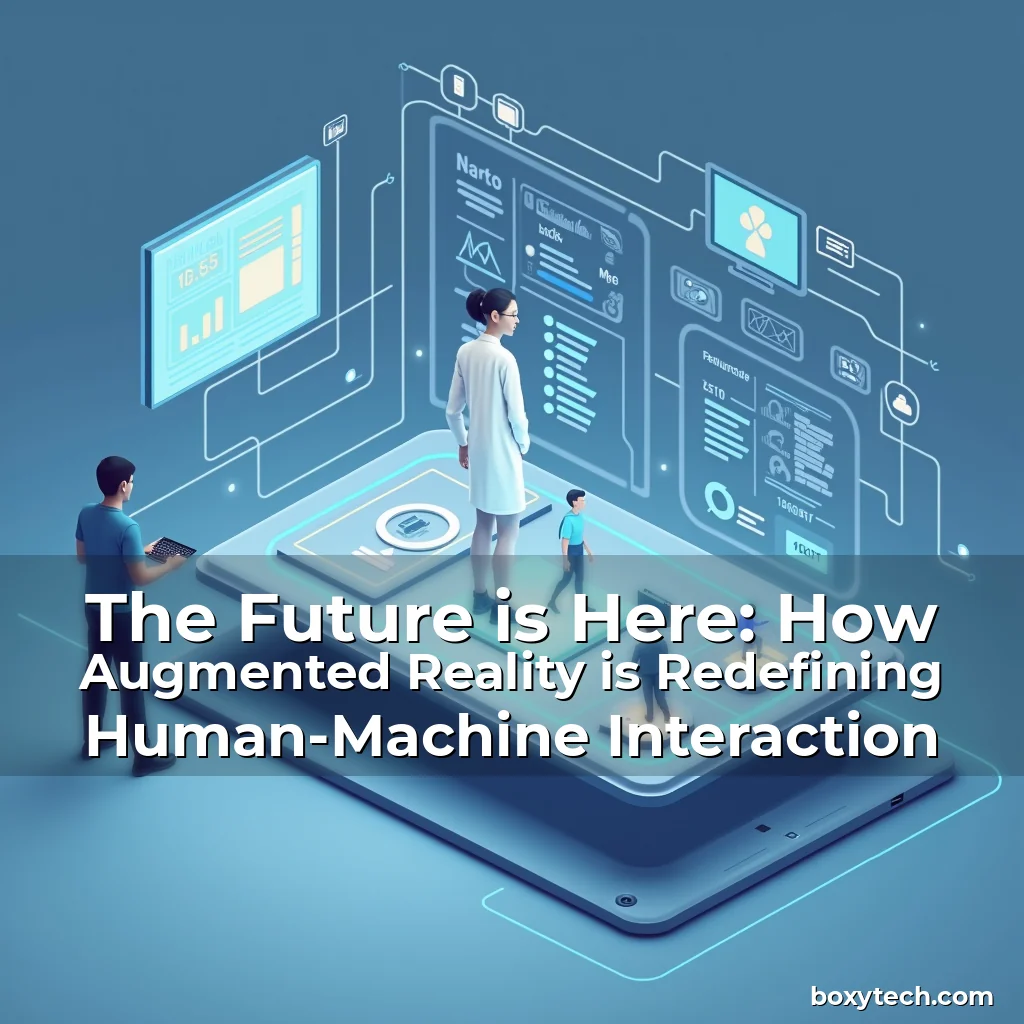
The Future is Here: How Augmented Reality is Redefining Human-Machine Interaction
Augmented reality has evolved from science fiction fantasy to an integral part of modern technological innovation. This transformative technology overlays digital information onto our physical world in real-time, creating immersive experiences that blend virtual elements seamlessly with reality.
In recent years, AR has moved beyond niche applications to become a mainstream force across industries ranging from healthcare to education. Its ability to enhance human perception through smart glasses, mobile devices, and specialized headsets opens up unprecedented possibilities for interaction between people and their environments.
Redefining Visual Perception Through Digital Overlay
The fundamental principle behind augmented reality lies in its capacity to augment rather than replace our natural visual experience. Unlike virtual reality which creates entirely artificial environments, AR enhances existing surroundings by superimposing computer-generated imagery over real-world views.
This dual-layered approach allows users to maintain situational awareness while accessing additional contextual data. For example, construction workers can see structural blueprints overlaid on actual buildings they’re working on, providing critical spatial information without requiring them to consult separate documents.
Digital overlay technologies have advanced significantly:
- Optical See-through displays allow users to view both real and virtual objects simultaneously
- Video See-through systems use cameras to capture real environments before adding digital elements
- Holographic projections create three-dimensional images that appear suspended in space
These different approaches enable developers to tailor AR experiences based on specific application requirements. The choice between optical and video see-through methods often depends on factors like power consumption, field-of-view limitations, and image fidelity needs.
The evolution of display technology has been crucial in making AR more practical for everyday use. Modern micro-OLED screens now offer high resolution at low power levels, enabling wearable AR devices to function effectively without draining battery life too quickly.
Industrial Applications Shaping Tomorrow’s Workforce
Manufacturing sectors are leading the charge in adopting AR solutions that boost productivity and safety standards. Assembly line workers equipped with smart glasses receive step-by-step instructions projected directly into their field of vision, reducing errors and increasing efficiency.
One notable implementation involves Boeing technicians using Microsoft HoloLens to visualize complex wiring diagrams during aircraft assembly. This hands-free access to technical documentation has reduced training time by up to 30% and improved first-time quality rates.
AR also plays a vital role in predictive maintenance operations within industrial settings. By integrating IoT sensors with AR interfaces, engineers can monitor equipment health in real-time and identify potential issues before they escalate into full-blown failures.
Key benefits observed in industry adoption include:
- Reduction in error rates by up to 85%
- Training time decreases by as much as 60%
- Increased operational efficiency by 40-50%
- Improved worker safety through real-time hazard alerts
These improvements translate directly into cost savings for companies implementing AR solutions. A study by PwC estimated that widespread AR adoption could generate $1.5 trillion in economic value globally by 2030.
Revolutionizing Healthcare Through Immersive Technology
Medical professionals are leveraging augmented reality to enhance diagnostic accuracy and surgical precision. Surgeons can now perform pre-operative planning using 3D reconstructions derived from patient scans, allowing for better visualization of anatomical structures.
Pioneering institutions like Johns Hopkins Hospital utilize AR to assist in minimally invasive procedures. By projecting a patient’s internal anatomy onto the surgeon’s visor, doctors achieve greater spatial understanding during delicate operations.
Notable medical applications of AR include:
- Surgical navigation systems guiding instruments with sub-millimeter precision
- Virtual anatomy models used for medical student training
- Augmented pathology tools helping diagnose diseases faster
- Rehabilitation programs incorporating interactive feedback mechanisms
Clinicians report significant improvements in procedural success rates when using AR-assisted techniques. One study found that orthopedic surgeons achieved 29% higher accuracy in implant placement when guided by AR compared to traditional methods.
Beyond surgery, AR is transforming medical education through immersive learning experiences. Virtual dissections and interactive anatomy modules provide students with opportunities to explore human physiology in ways previously unimaginable.
Educational Transformation Through Contextual Learning
Classrooms around the world are undergoing a paradigm shift thanks to AR-enhanced teaching methodologies. Traditional textbooks are being replaced by dynamic, interactive content that brings abstract concepts to life in three dimensions.
Students studying biology can now observe molecular interactions in real-time, while history lessons come alive with holographic recreations of ancient civilizations. These experiential learning approaches increase engagement and retention rates dramatically.
Education sector benefits from AR integration:
- Enhanced comprehension of complex scientific phenomena
- Greater student participation and motivation
- Hands-on training simulations replacing expensive lab equipment
- Personalized learning paths tailored to individual progress
Universities such as Stanford and MIT have already implemented AR-based curricula that show measurable improvements in academic performance. Early adopters report up to 40% increases in knowledge retention among participating students.
The impact extends beyond formal education to corporate training programs. Companies like Walmart use AR to train employees in retail scenarios, resulting in shorter training periods and better customer service outcomes.
Consumer Adoption and Market Growth Projections
The consumer market for augmented reality is experiencing exponential growth driven by advancements in smartphone capabilities and decreasing hardware costs. Smartphones now serve as powerful platforms for delivering rich AR experiences through built-in cameras and motion sensors.
Market research firms predict that the global AR market will reach $188 billion by 2025, growing at a compound annual rate of 43%. This rapid expansion reflects increasing consumer demand for interactive shopping experiences and entertainment options.
Top trends shaping consumer AR adoption:
- Mobile-first strategies dominating product development
- Gaming as primary driver of user engagement
- Virtual try-ons revolutionizing e-commerce
- Social media integration enhancing shareability features
Leading tech giants are investing heavily in AR ecosystems. Apple’s ARKit and Google’s ARCore frameworks have enabled thousands of apps to deliver compelling experiences on billions of compatible devices worldwide.
The rise of metaverse initiatives further accelerates consumer interest in AR technology. As social platforms incorporate mixed reality features, expect continued innovation in how we interact digitally with our environment.
Challenges and Ethical Considerations
Despite its many advantages, augmented reality presents several challenges that need careful consideration. Privacy concerns arise from constant environmental scanning and personal data collection inherent in AR systems.
There are also questions regarding digital divide issues – as AR becomes more prevalent, there’s risk of widening gaps between those who can afford cutting-edge technology and those who cannot. Accessibility remains another concern, particularly for individuals with disabilities.
Technical hurdles currently facing AR development:
- Limited battery life in portable AR devices
- Field-of-view restrictions in current headset designs
- Latency issues affecting real-time rendering
- Eye-tracking accuracy impacting user interface responsiveness
Addressing these challenges requires ongoing R&D efforts focused on improving hardware specifications and optimizing software algorithms. Collaborative industry efforts may help establish ethical guidelines governing AR usage in public spaces.
Regulatory bodies are beginning to consider legal frameworks for AR applications, especially concerning location tracking, facial recognition, and data security protocols. Clear regulations will be essential as AR becomes more integrated into daily life.
Futuristic Innovations and Emerging Technologies
Researchers are exploring next-generation AR innovations that promise to reshape human-computer interaction completely. Developments in light field technology aim to create truly immersive visual experiences with natural depth perception.
Neural interface integrations represent another frontier where brain-computer interfaces might eventually control AR displays through thought alone. While still in experimental stages, early prototypes demonstrate promising results.
Potential future breakthroughs include:
- Self-sustaining AR wearables powered by ambient energy harvesting
- Biometric authentication systems embedded in AR lenses
- Telepresence solutions combining AR with robotics for remote collaboration
- Advanced haptic feedback systems replicating tactile sensations
As AI capabilities continue to evolve, we’ll likely see smarter AR assistants capable of anticipating user needs and offering contextually relevant information automatically. These intelligent agents could fundamentally change how we navigate our environments.
Looking ahead, the convergence of AR with quantum computing might unlock new computational paradigms that could revolutionize everything from cryptography to materials science. Such developments would require substantial investment but hold immense long-term potential.
Conclusion
Augmented reality stands at the forefront of technological innovation, poised to transform nearly every aspect of modern life. From industrial applications to educational reforms, AR continues to push boundaries and redefine what’s possible.
As the technology matures, embracing AR responsibly while addressing associated challenges will determine its successful integration into society. Professionals and enthusiasts alike should stay engaged with emerging developments to fully leverage this groundbreaking capability.

news is a contributor at BoxyTech. We are committed to providing well-researched, accurate, and valuable content to our readers.