Drone Technology for Small Spaces
Drone Technology for Small Spaces
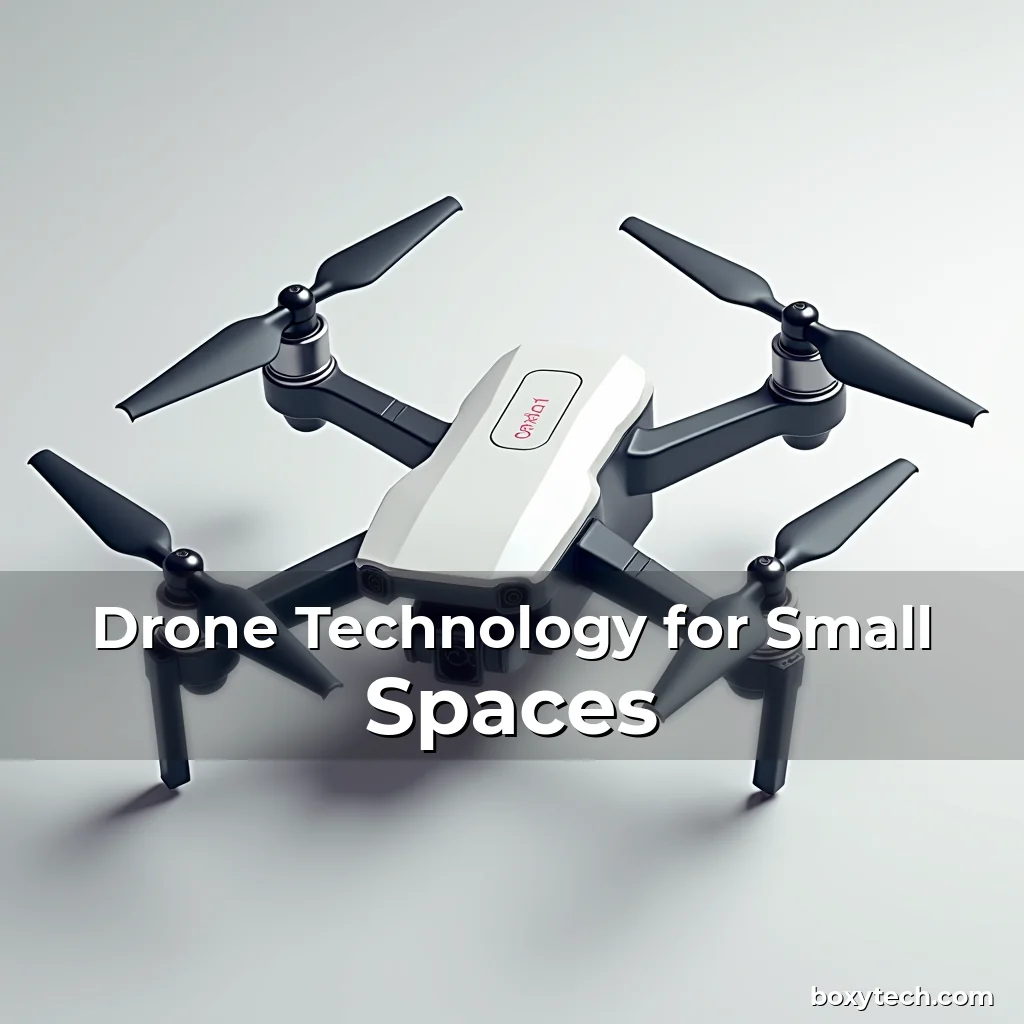
In an era where space optimization is crucial, drone technology has emerged as a transformative force across various industries. From urban delivery services to precision agriculture, drones are redefining what’s possible within confined environments.
Their compact design and advanced capabilities make them ideal solutions for navigating tight spaces that traditional machinery cannot access efficiently.
Evolution of Drone Technology
Drones have evolved from simple remote-controlled aircraft to sophisticated autonomous systems equipped with cutting-edge sensors and AI-driven navigation. This transformation reflects decades of innovation driven by both military applications and commercial interests.
The early models were primarily used for surveillance and reconnaissance missions during conflicts. However, advancements in miniaturization and computing power have expanded their utility far beyond these initial purposes.
Today’s drones integrate GPS, obstacle avoidance, and real-time data processing technologies that enable precise operations even in complex terrains.
- Miniaturization: Smaller components allow for lighter, more agile drones capable of maneuvering through narrow gaps.
- Sensor Integration: Advanced cameras, LiDAR, and thermal imaging enhance situational awareness and operational accuracy.
Applications in Urban Environments
Cities present unique challenges due to dense infrastructure and limited vertical space. Drones offer innovative solutions for tasks such as package delivery, aerial inspections, and emergency response coordination.
Companies like Amazon and Google have invested heavily in drone delivery networks designed specifically for metropolitan areas. These initiatives aim to reduce traffic congestion while improving last-mile logistics efficiency.
Emergency responders utilize drones for search-and-rescue operations, enabling rapid assessment of disaster zones without risking human lives.
Aerial Inspection Capabilities
Drones equipped with high-resolution cameras can inspect buildings, bridges, and other critical structures with unprecedented detail. They eliminate the need for dangerous manual inspections at great heights.
According to industry reports, the use of drones for infrastructure inspection has reduced project timelines by up to 60% compared to conventional methods. This efficiency translates directly into cost savings for municipalities and private enterprises alike.
Impact on Agriculture
Farmers face increasing pressure to maximize yields while minimizing resource consumption. Drones provide targeted solutions for monitoring crop health, managing irrigation, and applying fertilizers precisely where they’re needed most.
By using multispectral imaging, farmers gain insights into plant vitality levels down to individual fields. This granular data helps optimize planting patterns and pesticide application strategies.
Drones also play a vital role in pest control by detecting infestations early and deploying natural deterrents before damage becomes severe.
The integration of machine learning algorithms allows for predictive analytics regarding weather impacts on crops, enabling proactive rather than reactive farming practices.
Medical Delivery Innovations
In remote or underserved regions, medical supply chains often suffer from inefficiencies that compromise patient care. Drones offer a viable alternative for transporting essential medicines, blood products, and diagnostic samples quickly over long distances.
Pilot programs in countries like Rwanda and Ghana demonstrate how drones can deliver life-saving treatments to rural communities unreachable by road networks. These operations significantly reduce waiting times for critical interventions.
Beyond basic transport functions, some drones now feature temperature-controlled compartments ensuring safe storage conditions for sensitive pharmaceuticals during transit.
Regulatory Landscape and Safety Concerns
Governments worldwide are grappling with how best to regulate drone usage given its growing prevalence in public airspace. Balancing innovation with safety remains a central challenge for policymakers.
Current regulations vary widely between jurisdictions but typically include restrictions on flight altitude, proximity to airports, and requirements for pilot certification. Compliance ensures responsible operation while mitigating potential risks.
Advancements in geofencing technology help enforce legal boundaries automatically, preventing unauthorized flights near restricted areas without requiring constant user intervention.
Ongoing research focuses on developing collision detection systems that could autonomously avoid obstacles in real time, further enhancing overall system reliability.
Economic Implications and Market Growth
The global drone market is projected to reach $89 billion by 2027, reflecting strong demand across multiple sectors including construction, energy, and entertainment. This growth trajectory underscores the economic significance of continued investment in related technologies.
Small businesses benefit particularly from affordable consumer-grade drones that facilitate tasks ranging from property surveys to event videography. The accessibility of entry-level models democratizes technological adoption among entrepreneurs.
Investment in R&D drives down production costs over time, making advanced features increasingly available at lower price points. This trend supports broader industry participation and fosters competitive differentiation based on functionality.
Future Directions in Drone Innovation
As we look ahead, several emerging trends suggest significant shifts in drone technology development. Swarm intelligence represents one promising area where coordinated groups of drones work together seamlessly towards common objectives.
Researchers are exploring bio-inspired designs that mimic animal movement patterns to create more efficient flying mechanisms. Such innovations may lead to breakthroughs in endurance and agility previously unattainable with standard configurations.
The convergence of drone tech with augmented reality promises new interactive experiences for users across gaming, education, and professional training domains. Virtual overlays combined with physical drone movements open exciting possibilities for immersive simulations.
Quantum computing holds potential future applications in optimizing route calculations and sensor data analysis at speeds currently unimaginable. While still theoretical, foundational research lays groundwork for eventual practical implementations.
Environmental Considerations
Sustainability concerns surrounding drone manufacturing and operation require careful attention. Although electric propulsion reduces emissions compared to traditional aircraft, lifecycle assessments reveal environmental trade-offs worth examining closely.
Material choices impact recyclability rates; manufacturers are increasingly adopting biodegradable composites and modular designs aimed at extending product lifespans and simplifying end-of-life management processes.
Energy consumption varies greatly depending on payload capacity and range requirements. Optimizing battery efficiency not only enhances performance metrics but also contributes positively toward reducing carbon footprints associated with frequent charging cycles.
Initiatives promoting solar-powered drones represent another avenue being explored actively within academic circles and startup ecosystems focused exclusively on green aviation solutions.
Challenges and Opportunities Ahead
Despite remarkable progress, numerous hurdles remain before drones achieve full mainstream acceptance in everyday scenarios. Public perception issues stemming from privacy fears must be addressed transparently through clear policy frameworks.
Technical limitations persist regarding extended flight durations and reliable connectivity under adverse weather conditions. Overcoming these barriers requires sustained engineering efforts alongside strategic partnerships between academia and industry leaders.
However, each challenge presents opportunities for innovation. For instance, improved battery chemistries hold promise for longer operational periods, while enhanced communication protocols ensure stable connections even amidst electromagnetic interference.
Collaborative platforms fostering knowledge exchange between stakeholders will accelerate problem-solving approaches and drive collective advancement within the field.
Conclusion
Drone technology continues to reshape our understanding of spatial limitations and operational efficiencies across diverse applications. Its adaptability makes it an invaluable tool for tackling contemporary problems faced by modern societies.
Professionals engaged in technology fields stand at the forefront of this revolution, tasked with harnessing current capabilities while anticipating future developments poised to redefine entire industries yet again.

news is a contributor at BoxyTech. We are committed to providing well-researched, accurate, and valuable content to our readers.