Professional Drone Technology: Advanced Techniques
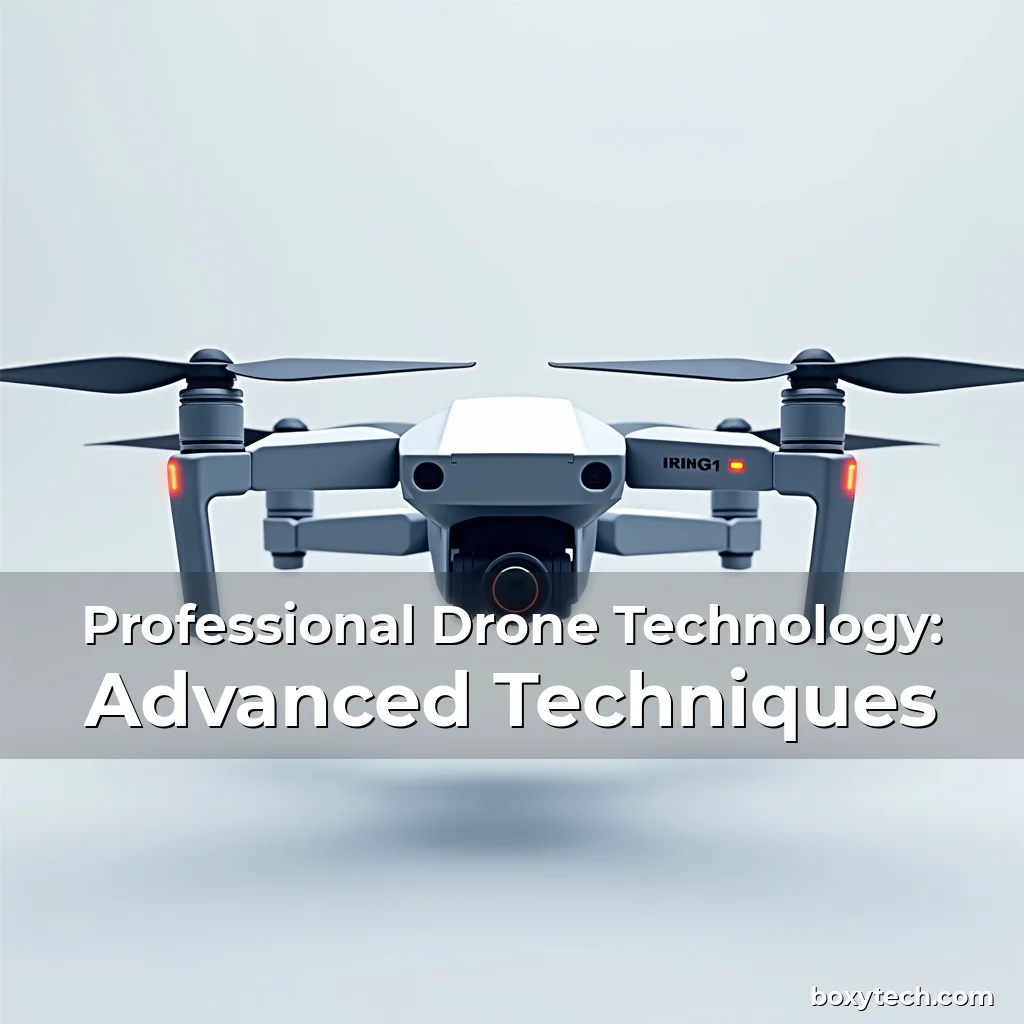
The Future of Aerial Innovation: Mastering Professional Drone Technology
In an era where aerial perspectives are reshaping industries from agriculture to urban planning, professional drone technology has emerged as a cornerstone of modern innovation. These sophisticated flying platforms combine cutting-edge engineering with advanced software capabilities to deliver unparalleled precision and efficiency.
Drones have evolved far beyond simple recreational gadgets, now serving critical roles in infrastructure inspection, environmental monitoring, and even emergency response operations. This transformation is driven by rapid advancements in sensor integration, artificial intelligence, and autonomous flight systems.
Redefining Industry Standards Through Precision Engineering
Modern commercial drones incorporate aerospace-grade materials that balance durability with weight optimization. Carbon fiber composites and titanium alloys enable these devices to withstand harsh environments while maintaining exceptional maneuverability.
Propeller design plays a crucial role in performance optimization. Advanced blade geometries reduce turbulence and increase lift efficiency, allowing drones to carry heavier payloads over extended distances without compromising stability.
- Aerodynamic Efficiency: Drones utilize vortex generators and laminar flow control surfaces to minimize drag resistance during high-speed maneuvers.
- Vibration Suppression: Integrated gyroscopic dampeners ensure stable camera footage even in turbulent wind conditions.
Battery technology breakthroughs have significantly expanded operational ranges. Lithium-polymer cells with graphene-enhanced electrolytes provide up to 90 minutes of continuous flight time under optimal conditions.
Cooling systems employ phase-change materials that absorb heat generated by high-performance processors, preventing thermal throttling during prolonged missions.
Intelligent Autonomy: The Brain Behind the Machine
Artificial intelligence algorithms power autonomous navigation systems that process real-time data from LiDAR sensors and visual recognition modules. These systems enable obstacle avoidance at speeds exceeding 60 km/h.
Machine learning models trained on millions of flight hours allow drones to predict air traffic patterns and optimize route planning dynamically. This capability reduces mission completion times by up to 35% in complex environments.
Pathfinding Algorithms in Action
Advanced pathfinding techniques use graph theory principles to calculate the most efficient routes through three-dimensional space. These calculations consider factors such as altitude restrictions and signal interference zones.
Real-world testing shows that AI-driven routing can decrease energy consumption by 28% compared to traditional waypoint-based navigation methods. This efficiency translates to significant cost savings across industrial applications.
Sensor Fusion: Enhancing Perception Capabilities
Multispectral imaging sensors capture data across various wavelengths, enabling precise crop health analysis in agricultural settings. Thermal cameras detect temperature differentials useful for building diagnostics and wildlife tracking.
Ultrasonic rangefinders complement GPS positioning by providing accurate distance measurements when operating indoors or near structures that interfere with satellite signals.
Fusion algorithms integrate inputs from disparate sensors to create comprehensive situational awareness. This redundancy ensures reliable operation even when individual components fail.
Recent developments include quantum dot sensors capable of detecting minute changes in electromagnetic fields, opening new possibilities for underground mapping and mineral exploration.
Data Analytics: Transforming Flight Data Into Business Insights
Cloud-based analytics platforms process terabytes of telemetry data collected during each flight. These systems identify patterns that inform maintenance schedules and optimize future mission parameters.
Predictive maintenance algorithms analyze vibration signatures and motor wear characteristics to forecast potential failures before they occur. Early detection can prevent costly downtime in critical operations.
Geospatial data processing tools convert raw imagery into actionable maps and 3D models. These outputs aid in construction progress tracking, archaeological site documentation, and disaster area assessment.
Blockchain technology secures sensitive data transmissions between ground stations and airborne units, ensuring compliance with regulatory requirements and protecting intellectual property.
Regulatory Compliance: Navigating the Legal Landscape
National aviation authorities impose strict regulations governing commercial drone usage. Operators must obtain certifications demonstrating proficiency in airspace management and safety protocols.
Remote identification systems transmit real-time location data to authorized enforcement agencies. This transparency helps maintain public trust while enforcing legal boundaries.
Privacy protection measures require operators to implement geofencing around restricted areas such as airports and government buildings. These digital barriers automatically prevent unauthorized flights in sensitive zones.
Ongoing dialogue between industry stakeholders and regulators shapes evolving standards. Current discussions focus on implementing dynamic airspace management systems that adapt to changing environmental conditions.
Ethical Considerations: Balancing Innovation With Responsibility
As drone technology advances, ethical questions arise regarding surveillance practices and data security. Responsible implementation requires clear guidelines for acceptable use cases and privacy protections.
Industry initiatives promote best practices through certification programs that emphasize safe operation and data handling procedures. These efforts help build public confidence in emerging technologies.
Transparency in data collection processes is essential for maintaining consumer trust. Clear communication about how information is used and stored fosters responsible adoption of drone services.
Collaborative frameworks involving ethicists, technologists, and policymakers will shape the future development of drone capabilities. These partnerships aim to maximize benefits while minimizing risks associated with widespread deployment.
Emerging Frontiers: Pushing the Boundaries of Possibility
Swarm robotics represents a revolutionary approach to drone operations, enabling coordinated actions among multiple units working towards common objectives. This concept draws inspiration from natural biological systems found in insect colonies.
Advances in nanotechnology may soon lead to micro-drones measuring less than an inch in size. These tiny machines could perform tasks ranging from medical deliveries inside human bodies to structural inspections in confined spaces.
Hybrid propulsion systems combining electric motors with hydrogen fuel cells promise longer endurance capabilities for long-range reconnaissance missions. Researchers are also exploring solar-powered alternatives for persistent surveillance operations.
Quantum computing holds transformative potential for optimizing complex logistics networks managed by fleets of autonomous drones. Its ability to solve intricate problems rapidly could revolutionize supply chain management approaches.
Training and Certification: Building Expertise for Tomorrow’s Challenges
Comprehensive training programs prepare operators to handle both routine operations and unexpected scenarios. Simulated environments replicate challenging conditions such as adverse weather and equipment malfunctions.
Certification exams test knowledge across multiple domains including aerodynamics, communications protocols, and emergency response procedures. Practical assessments evaluate hands-on skills required for real-world deployments.
Ongoing education keeps professionals updated on technological advancements and regulatory changes. Subscription-based platforms offer continuous learning opportunities tailored to specific industry needs.
Specialized tracks exist for niche applications such as cinematography, search-and-rescue operations, and scientific research. These focused curricula develop expertise relevant to particular career paths.
Conclusion
The evolution of professional drone technology continues to redefine what’s possible in aerial operations. From enhanced autonomy features to groundbreaking sensor innovations, the field remains at the forefront of technological advancement.
To fully leverage these capabilities, professionals must stay informed about emerging trends and continuously refine their technical competencies. Embracing lifelong learning ensures readiness for the challenges and opportunities that lie ahead.
“`

news is a contributor at BoxyTech. We are committed to providing well-researched, accurate, and valuable content to our readers.